How Cane Toads
Are Impacting Local Wildlife
While working in the Thornlands bushland, we came across a large fallen ironbark gum tree that had become home to a thriving beehive. The bees had built their hive securely in the fork of the tree, raised well above ground level — a position that would usually offer some protection from ground-dwelling predators; however, this height did not deter the cane toads.
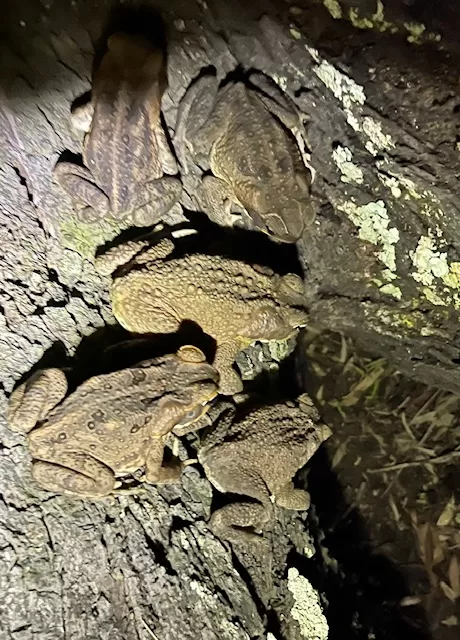
Using the rough, deeply fissured bark of the ironbark, the toads were able to climb the fallen trunk and make their way to the fork of the tree. From there, they congregated above the hive, positioning themselves where bees were constantly flying in and out.
Over time, the toads exploited this steady food source. As the bees exited or returned to the hive, they became easy prey. Five cane toads gather on the upper surface of the tree trunk, directly above the hive entrance, as depicted in the photograph.
Despite regular Bushcare efforts to remove cane toads from the surrounding area, the location and structure of the fallen tree made it difficult to prevent ongoing access, especially after rain. Over several months, the hive was gradually depleted until eventually it was left without any bees.
This experience highlights how cane toads can impact not only native wildlife but also important insect populations that play a vital role in bushland ecosystems. By reducing cane toad numbers in sensitive areas, we hope to lessen the likelihood of this kind of impact occurring again in the Thornlands bush.