Toad-Proofing Your Yard
Help to control cane toads entering your yard.
Creating a toad-proof yard is a positive step towards protecting local wildlife and keeping your pets safe. Many of these tips come from local volunteers who are eager to share practical strategies and real-world examples to help reduce cane toad activity around homes.
Understanding the threat: Why toad-proof your yard?
Cane toads are an invasive species and are toxic at all stages of their life cycle, from eggs and tadpoles to adults. Their poison can be deadly to native animals such as snakes, lizards, frogs, and birds, and poses a serious risk to domestic pets, particularly dogs, if they mouth or lick a toad.
Cane toads breed rapidly and move easily through connected bushland, drainage lines, and suburban yards. Making your yard less accessible and less attractive to toads is a simple but effective way to help protect local wildlife and reduce risks to pets.
Key strategies for toad-proofing
1. Secure fencing and barriers
Physical barriers are one of the most effective ways to reduce cane toad access. While toads are not strong climbers, they can grip rough surfaces and squeeze through surprisingly small gaps.
- Install smooth barriers at least 50 cm high, buried 10–15 cm into the ground to prevent burrowing underneath.
- Suitable materials include smooth plastic sheeting, pond liner, or fine mesh with openings too small for toads to pass through.
- Ensure barriers are continuous, with no gaps, tears, or rough surfaces that could provide footholds.
Sealing gaps:
Check under gates, fences, sheds, and retaining walls. Use weather stripping, rubber seals, or additional buried barriers to block entry points.
2. Eliminate breeding and attraction sites
Pet water and food bowls:
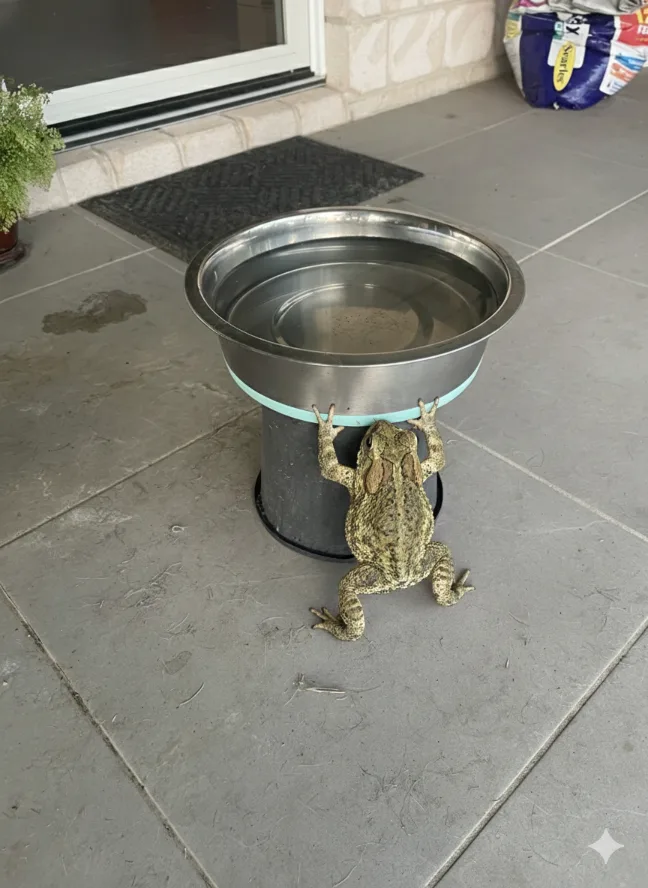
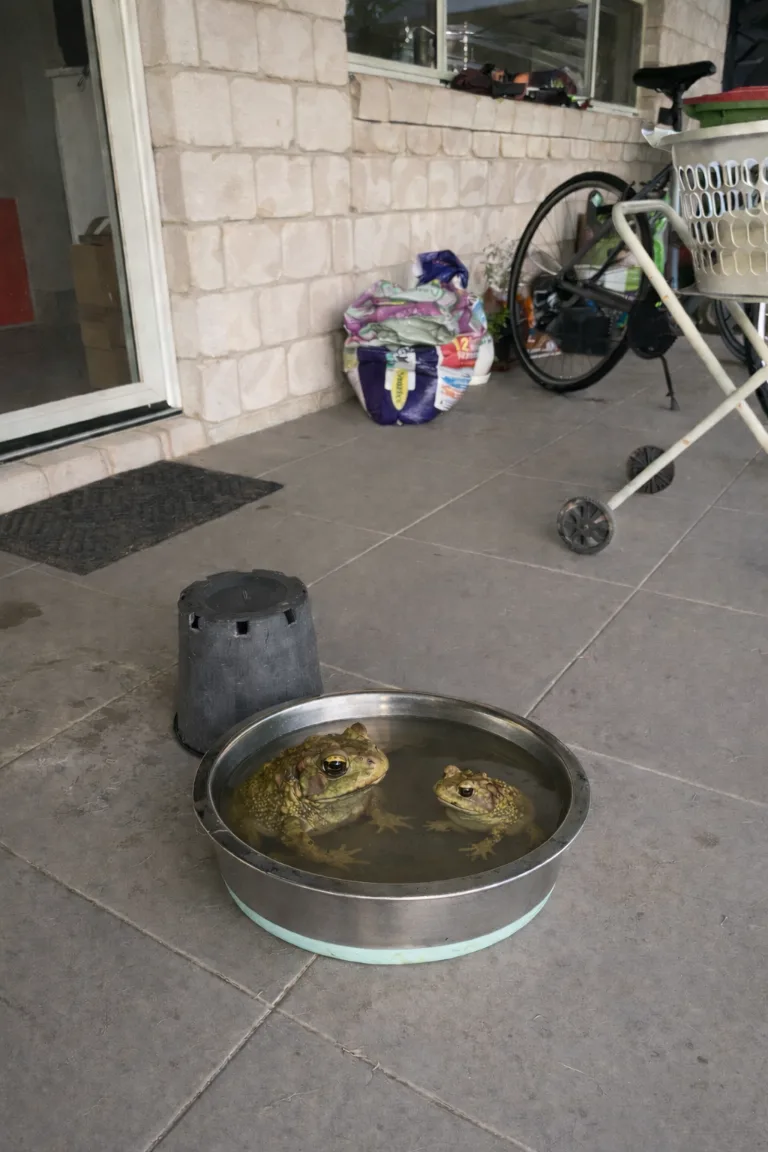
Pet bowls are a major attractant and poisoning risk. Cane toads can contaminate water and food with their toxic skin secretions, which can cause excessive drooling, red gums, vomiting, seizures, and collapse in pets.
To reduce risk:
- use raised bowls or place bowls on stands with smooth vertical sides,
- bring bowls inside overnight, and
- be extra vigilant after rain and during warm months when toads are most active.
Cane toads require water to breed and are strongly attracted to moisture.
Ponds and water features:
If you have an ornamental pond or water feature, reduce access by:
- raising edges,
- installing smooth vertical sides, or
- covering ponds with fine mesh at night during the breeding season.
Preventing toads from accessing water is far more effective than trying to control eggs or tadpoles after breeding has occurred.