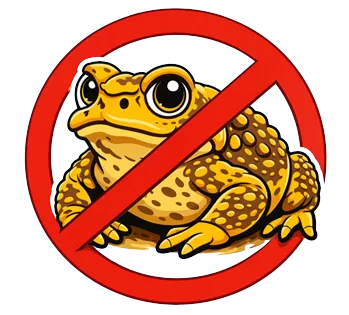
Correct identification is one of the most important aspects of responsible wildlife management in South-East Queensland. Cane toads are an introduced species that have a significant impact on native wildlife, but many native frogs can look similar at a glance. Mistaken identification can lead to harm to protected species.
Understanding the difference between cane toads and native frogs is essential for anyone who takes part in toad management — whether that’s a formal Bushcare activity or simply making decisions in your own backyard.
Why identification matters
Every native frog in Queensland is protected under state legislation. That means it is not just ethically important to identify correctly — it is a legal requirement. Handling or harming a native frog, even by accident, has real consequences for local ecosystems and for volunteers.
Cane toads and some native frogs share a similar size range and skin texture, and in low light or wet conditions, the differences can be easy to miss. Juvenile cane toads in particular can look deceptively like native species.
What to look for
- Parotoid glands behind the eyes — large, raised, kidney-shaped glands are a strong indicator of a cane toad
- Skin texture — cane toads have dry, heavily warty skin; many native frogs have smoother or lumpier-but-softer skin
- Posture and movement — cane toads hop in short, low bounces rather than the long leaps of native frogs, and often sit out in the open near lights, patios, and water bowls
- Size — adult cane toads are often much larger than most native frogs
When in doubt, do not act
If you are not 100% confident that an animal is a cane toad, the correct response is to leave it alone. Photograph it from a safe distance if you would like guidance, and seek advice before intervening. Leaving an animal undisturbed is always the most responsible option when identification is uncertain.